TRANSFORMATION
2003–2005
Acrylic on canvas
Acrylic on canvas
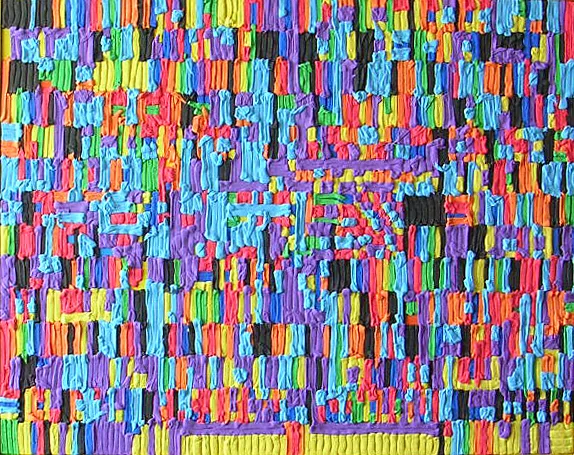
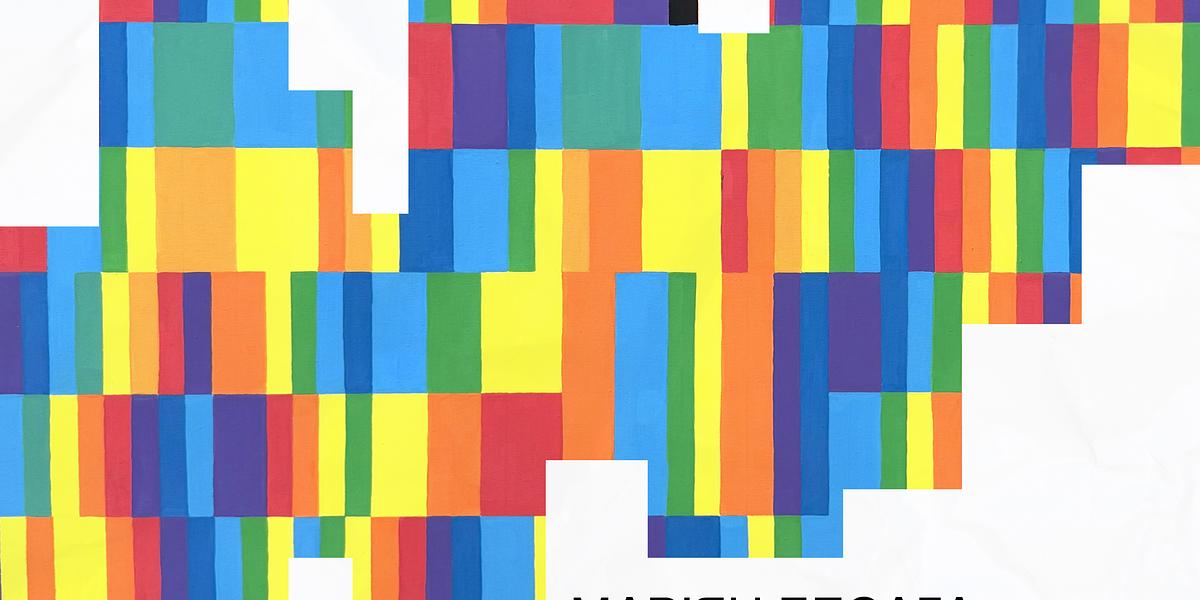
Transformation was one of my first independent projects after completing my studies at the Academy of Fine Arts in Kraków. It emerged from an exploration of the possibility of transforming sound into colour, rhythm, and form — translating one mode of perception into another.
An important foundation for these explorations was my study in the studio of Professor Jan Pamuła and the development of my diploma project under his supervision, as well as my encounter with the methodology of Professor Adam Wsiołkowski. The experience of the Kraków school shaped my understanding of abstraction not as a rejection of reality, but as a means of exploring its underlying structures — rhythm, proportion, tension, repetition, and the interaction of colour and form.
Music by Bach, Mozart, Paganini, Tchaikovsky, Ysaÿe, and other composers became the point of departure for individual works. Yet I was not interested in illustrating music literally. A musical composition functioned instead as an impulse for constructing an autonomous visual system.
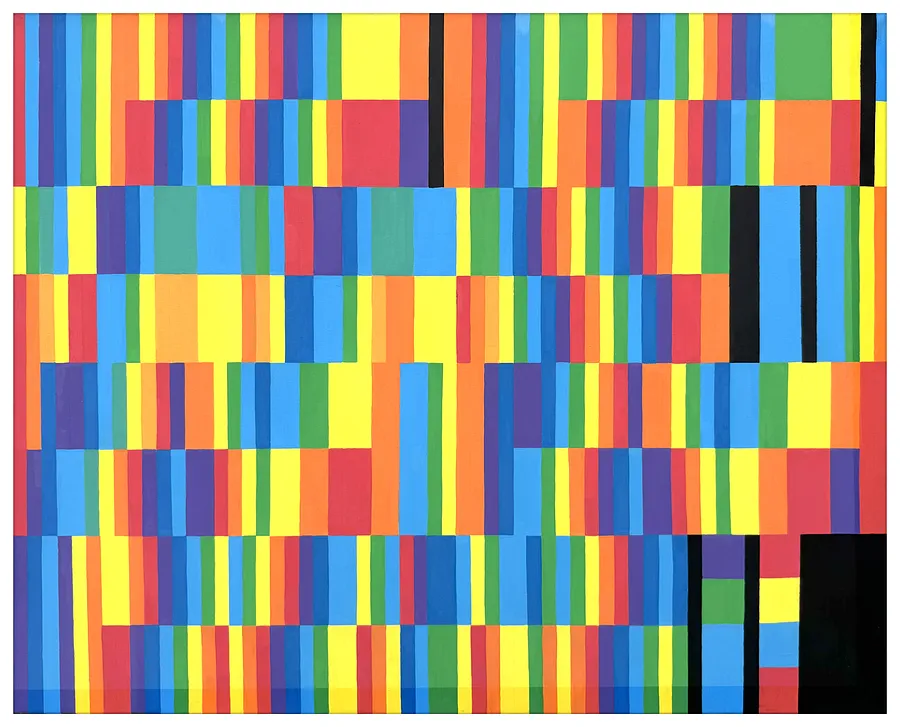
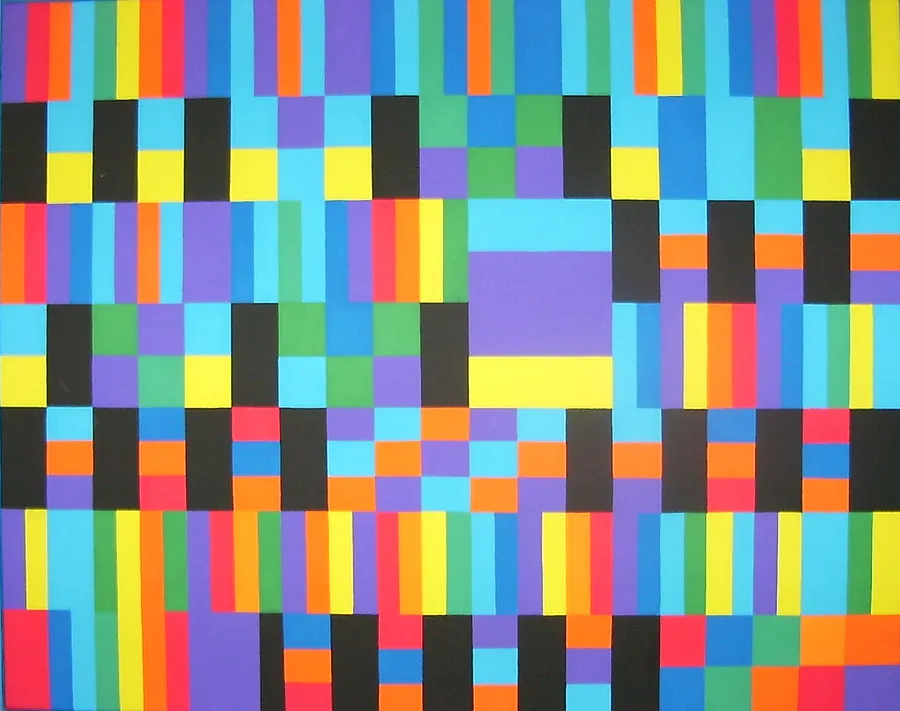
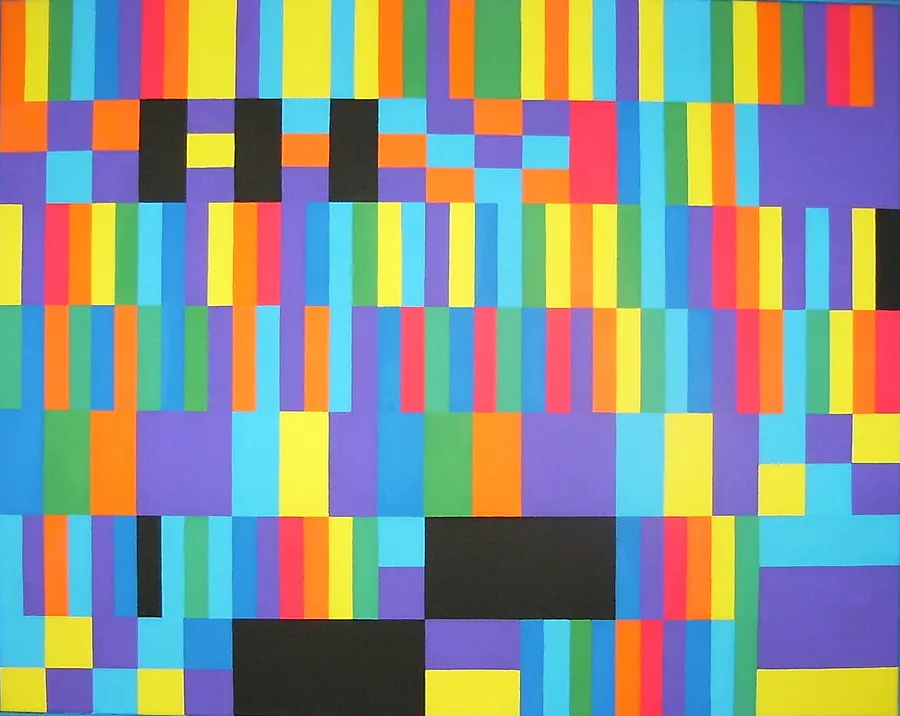
Musical duration is transformed into spatial rhythm; an accent becomes a field of colour; a pause becomes a black or unfilled space; repetition becomes a system of modules; and a change in tempo becomes a condensation or dispersion of structure. The canvas begins to function as a kind of score — one that is no longer heard, but perceived visually.
In Transformation, colour ceases to perform a descriptive function. It becomes an autonomous energy. Pure spectral colours interact with black, creating contrasts, pauses, and abrupt shifts in intensity. Geometric modules repeat, shift, expand, or fragment, generating a sense of movement within the stillness of the pictorial plane.
In works such as Paganini Caprice, April. Tchaikovsky, Little Prelude. Bach, New London. Siegmeister, Sonata. Mozart, Aurora. Ysaÿe, and Fantasia. Bach, music becomes the starting point for different models of interaction between colour, rhythm, and structure. Each composition follows its own internal logic, yet together they form a unified investigation into the mechanisms of visual rhythm.
The title Transformation therefore refers not only to the translation of sound into visual form. It points to a broader process: one system can be translated into the language of another while preserving not its external appearance, but its underlying structure, energy, and rhythm.
The project became an important stage in the development of my later artistic practice. It is here that questions first emerge to which I would repeatedly return: repetition and variation, system and chance, rhythm, energy, information, and the relationship between the visible and the invisible.
If in Transformation I explored how sound could become a visible structure, in subsequent projects this question gradually expanded: how can an invisible process — sound, energy, information, or presence — manifest itself through matter, colour, and form?
.jpg?locale=en)


.jpg?locale=en)


.jpg?locale=en)