RE-BORN
2026–ongoing
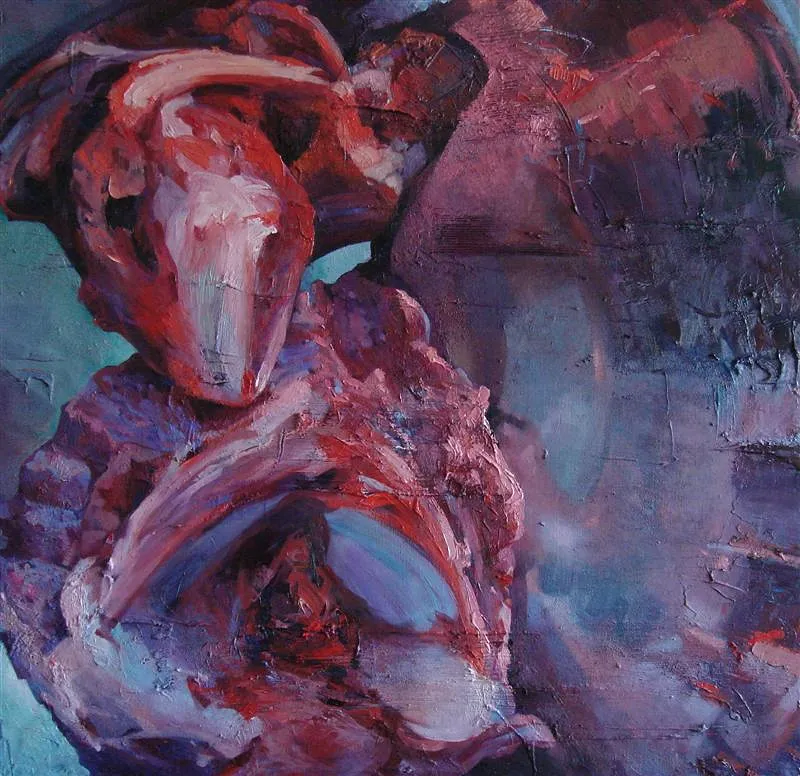
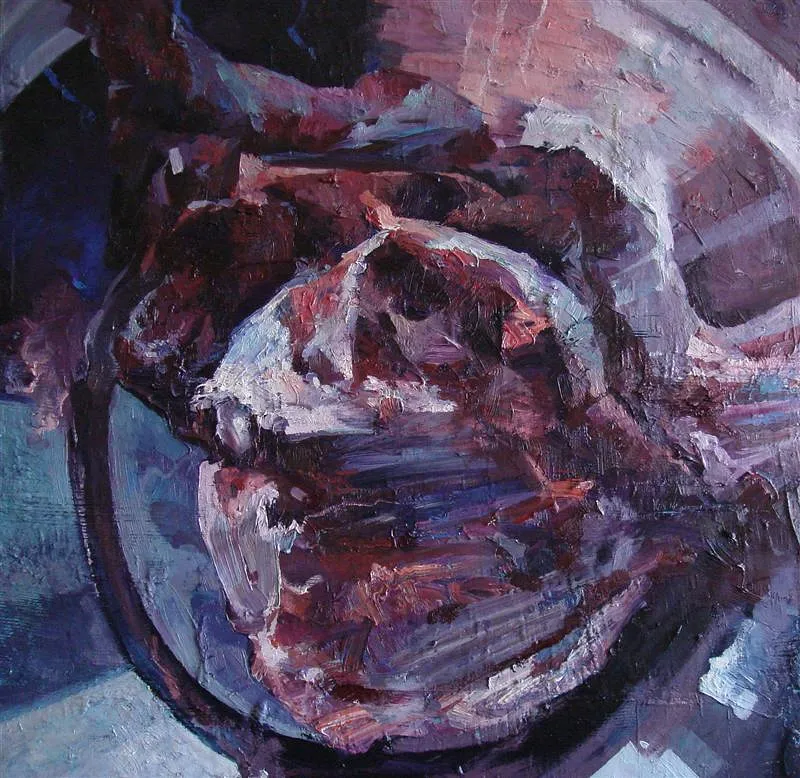
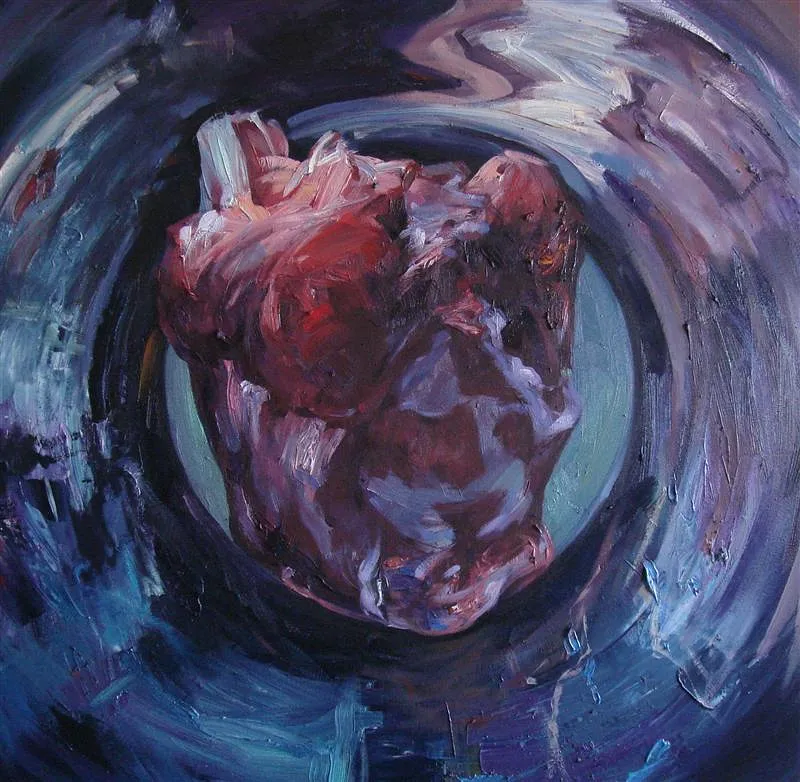
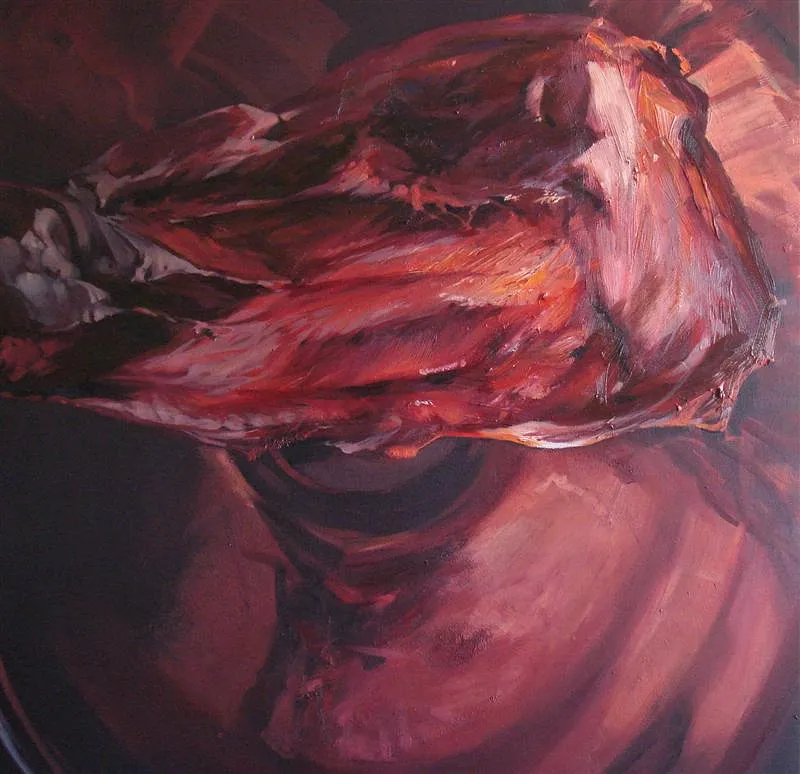
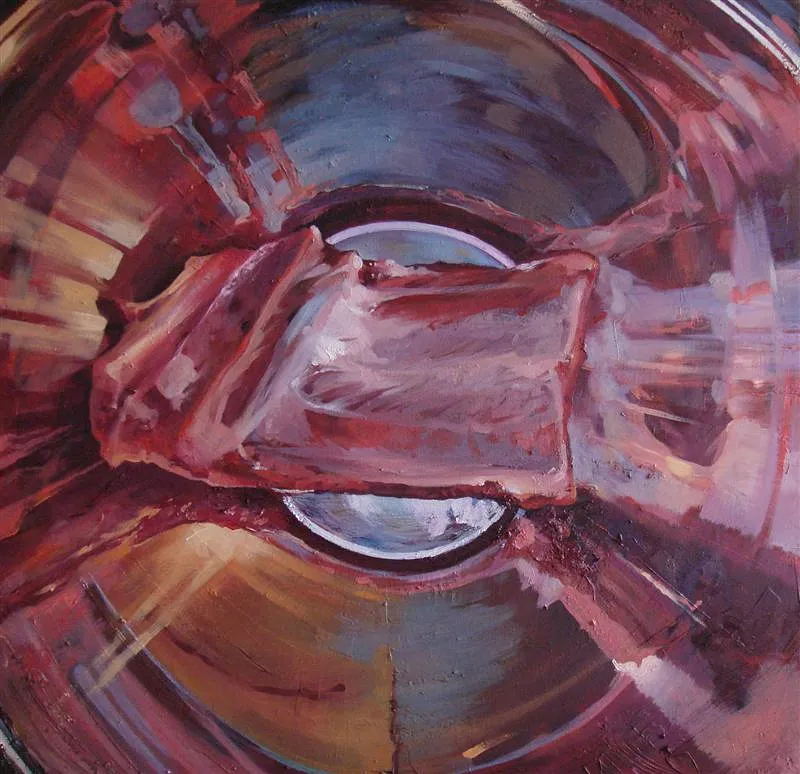
Re-born is a painting project about transformation, dissolution, and the possibility of new emergence. I am interested in the moment when a previous form loses its integrity, yet its disappearance does not necessarily mean an end. Within the very process of disintegration, the beginning of another state may already be taking shape.
At the core of the project lies the idea of the cyclical nature of existence. Birth and disappearance, formation and dissolution, matter and emptiness are not opposed to one another. They are different phases of a single continuous process.
For this reason, form in the works of Re-born is never entirely stable.
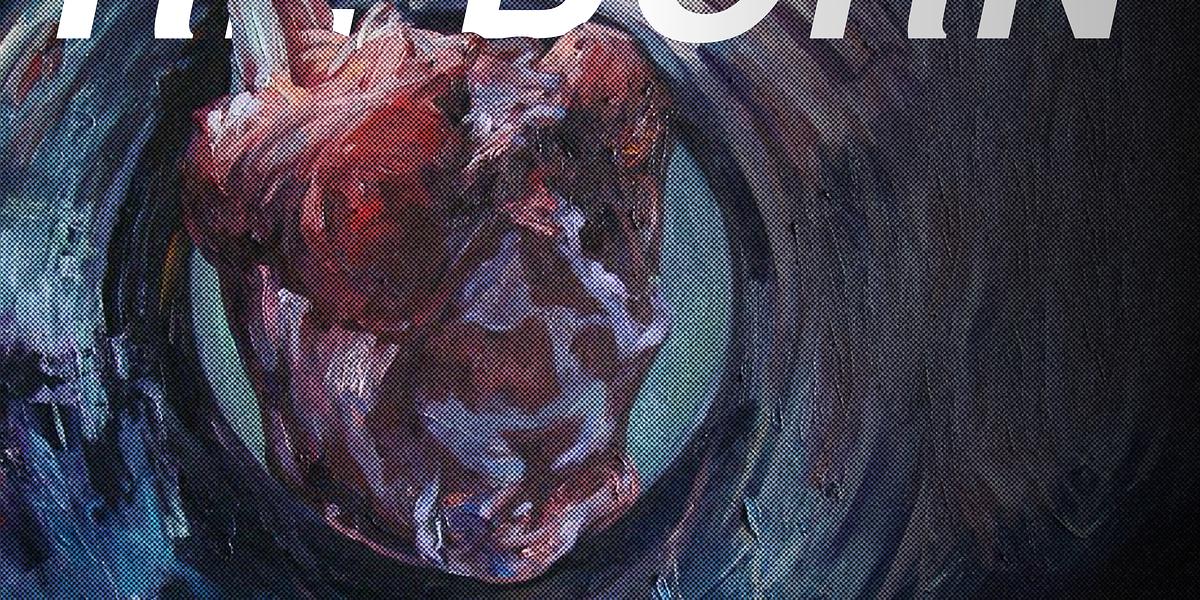
It emerges from the painterly environment, acquires a bodily presence, breaks apart, dissolves, and then begins to concentrate again. At times, its fragments may evoke bone, an organic structure, an embryo, or the remains of an unknown body. Yet these associations do not define a specific narrative — they merely bring the viewer closer to the sensation of matter existing between death and new life.
The painted surface itself acquires particular significance. Dense layers of paint, impasto, ruptures, and deformations transform the canvas into an environment in which the process of transformation takes place physically. Form is not simply depicted — it seems to emerge directly from the matter of painting itself.
Colour also functions as a carrier of state. Dark violet and purple masses create a sense of depth and indeterminate space, while ochre, flesh-toned, and luminous areas gradually emerge from within it. Light does not enter from outside; instead, it often appears to be born within the form itself.
Across the sequence of works Re-born I–VI, one can perceive not a literal narrative, but different phases of a single process: disintegration — remnant — concentration — transformation — emergence — new becoming.
For this reason, the idea of Re-born extends beyond physical rebirth. It may refer to a human being, nature, memory, culture, personal identity, or form itself. Something must lose its previous state in order to gain the possibility of becoming something else.
In this sense, the final work of the cycle, Re-born VI, is particularly important. It approaches an image of genesis, of a beginning — a symbolic return to the act of creation. Yet this beginning is no longer an absolute point of “zero”. It carries within it the memory of the disintegration that preceded it.
Rebirth here, therefore, does not mean returning to what once was.
To be reborn means to emerge again, but differently.
Within the context of my practice, Re-born continues questions that emerged in earlier projects. In Transformation, one structure passed into another; in Presence, the invisible manifested itself through the trace it left behind; in Prima Motus, I explored the primary moment of emergence. In Re-born, these processes converge at a single point — form disappears and is born at the same time.
It is precisely this contradiction that is central to the project.
Is the destruction of form its end — or merely the condition of its next state? Can matter retain the memory of what it once was? And does every ending already contain the potential for a new beginning?
Re-born leaves these questions open.
Re-born is an exploration of the threshold between disappearance and emergence: the moment when form loses its previous integrity, yet within its disintegration the possibility of a new existence is already being born. Rebirth here does not mean a return to the past, but the emergence of another form — one that retains the memory of what it once was.